The Magic of Marinades
Although it takes some forethought, marinades are an excellent way to enhance a meal.
To build a marinade you just need the proper ratios. In most cases, it should be 3 parts fat, 1 part acid, and 1 part seasonings.
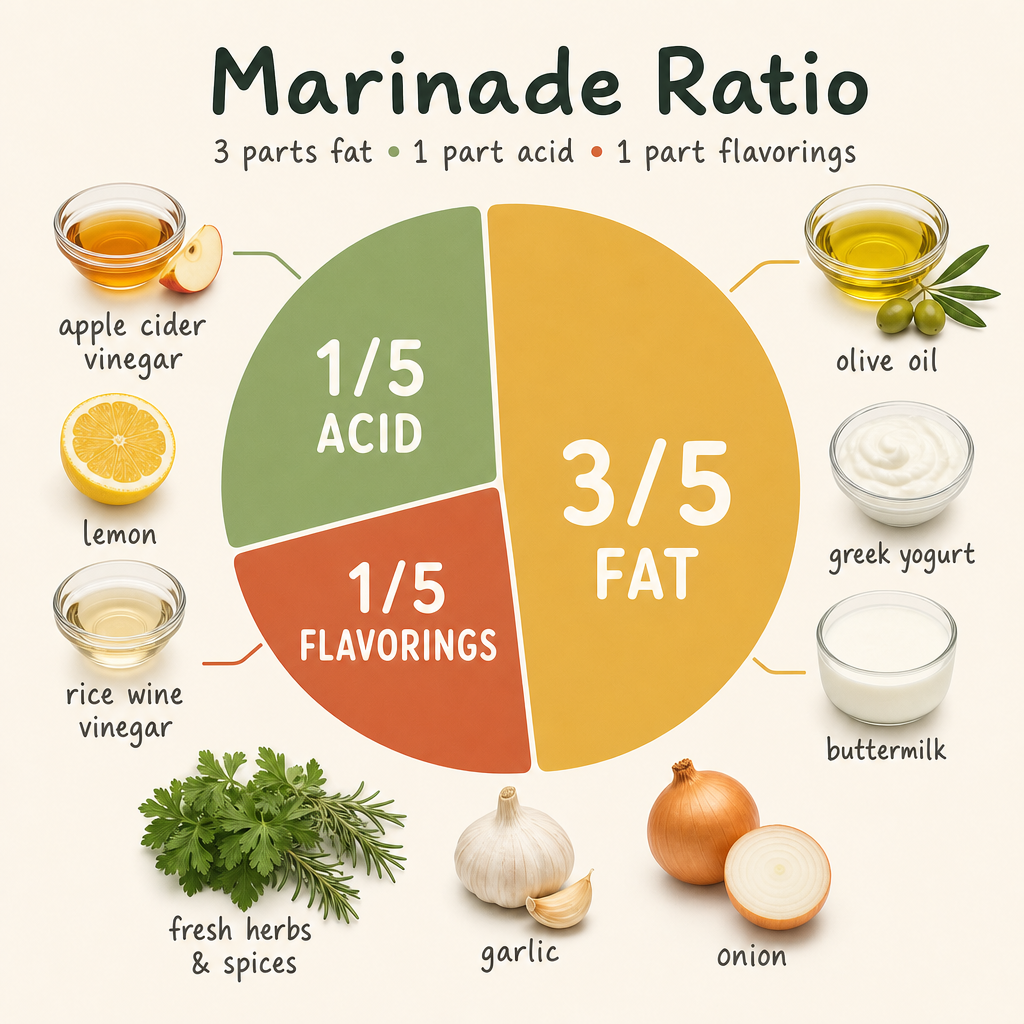
You can find examples of this in air fried pork chops or John’s Mediterranean chicken thighs.
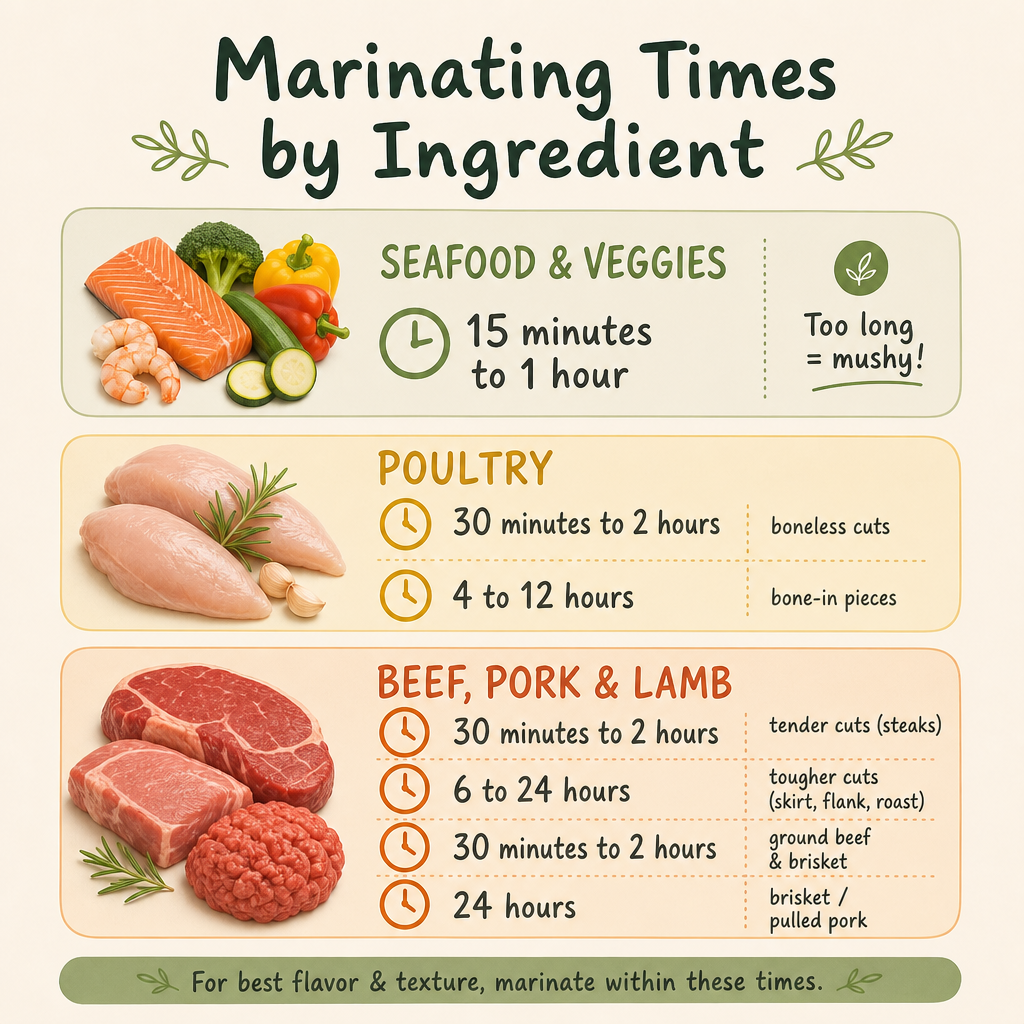
The amount of time to marinate is different for different cuts of meat. More delicate cuts like fish shouldn’t marinate too long and become mushy. Depending on the acid, it will actually cook the fish. Tougher cuts of meat should be given a greater amount of time so that it can penetrate the meat and break down connective tissue and muscle protein on the meat’s surface.
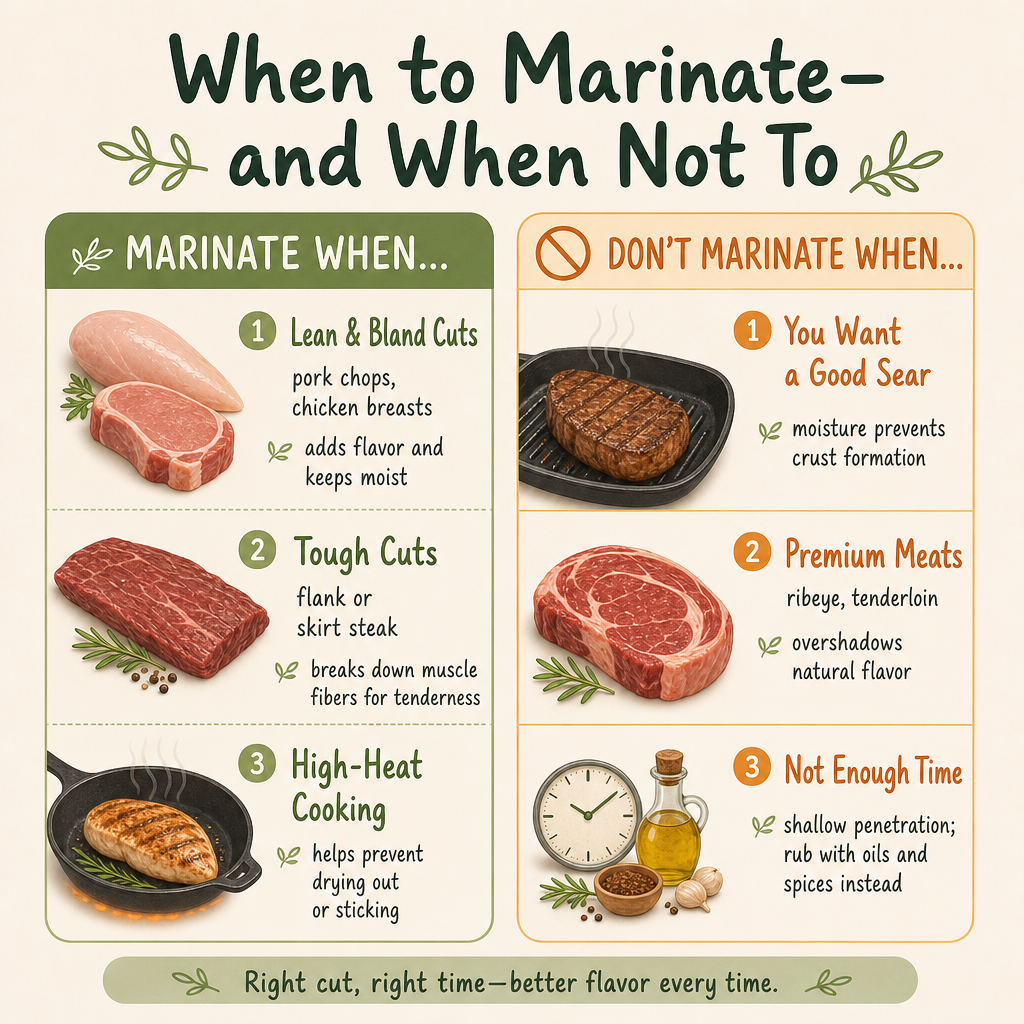
The other important thing to note is when to actually use a marinade. If you’re fixing a fancy ribeye steak, a marinade will keep it from getting that crispy crust and could cover over the natural flavor of the meat.
With a little creativity, you can learn to adjust the ratios and ingredients to fit your vision. In Roasted Root Beer Butterflied Chicken the root beer affected both acid and seasonings, which took some refactoring.
Also, I have learned that in some cases, the ratios for marinades can be flipped. For carne asada, the marinade was adjusted to 3 parts acid and 1 part fat so that the tissue could get further broken down before the quick cook time. This is more of an exception than the rule, but something to consider.
I hope you find this helpful and will share with me your wonderful creations.
Made something delicious? Join our FoodWise Facebook group to share your creations, ask questions, and swap ideas.